How to remove bathroom mold without spreading spores
Bathroom mold spreads every time you scrub it dry. Here is the containment-first method we use in Ventura to kill it without launching spores into the rest of your home.
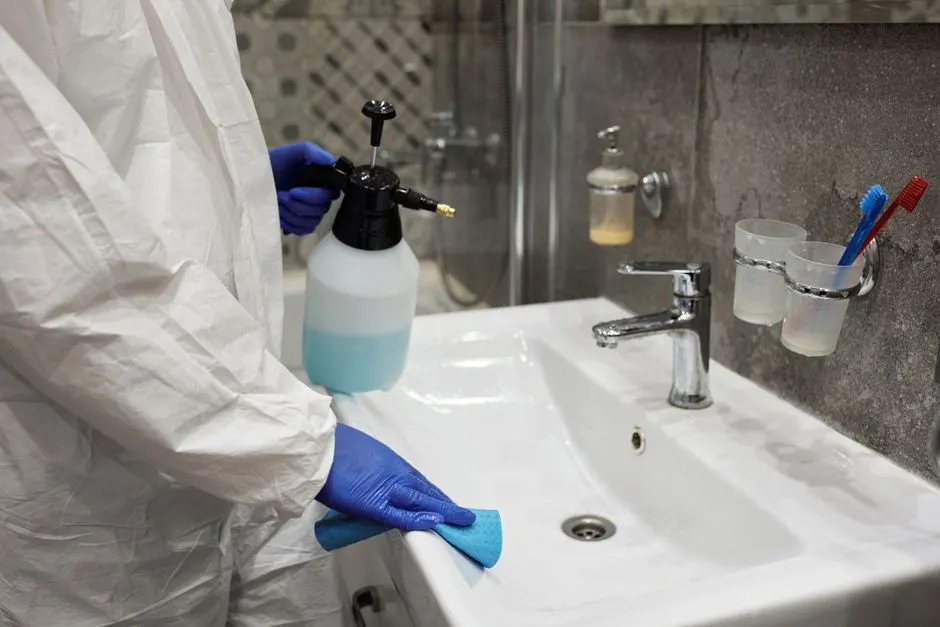
You remove bathroom mold without spreading spores by containing the work area first, wetting the mold instead of scrubbing it dry, and bagging every wipe before it leaves the room. Spores are microscopic and launch into the air the second you disturb a dry colony, so the order of operations matters more than the cleaning product.
We handle this every week in Ventura, where marine air and tight, poorly vented bathrooms give mold everything it needs. What follows is the same containment-first method our technicians use, plus the mistakes that turn a small patch into a whole-house problem.
Why bathroom mold spreads the moment you touch it
Bathroom mold spreads because every colony releases spores when it is disturbed, and a dry paper towel or brush flings those spores into the air where your exhaust fan pulls them through the house. A single square foot of active mold can hold hundreds of millions of spores. You cannot see them, and they stay airborne for hours.
Ventura makes this worse. Relative humidity along the coast sits in the 60 to 75 percent range much of the year, and our older midtown and Pierpont bungalows often have 4-inch exhaust fans that vent into the attic instead of outside. That is a mold factory running every time someone showers.
Mold needs three things: moisture, organic food (drywall paper, grout, wood, soap scum), and about 24 to 48 hours of standing damp. Take away the moisture and the colony goes dormant. Disturb it while it is dry and you just reseeded the room.
How do I remove bathroom mold without spreading spores in Ventura?
You remove bathroom mold without spreading spores in Ventura by sealing the room, wetting the growth, working top to bottom, and disposing of everything in sealed bags. Here is the sequence, start to finish.
Step 1: Seal the room and shut off the air
Close the bathroom door. Tape a plastic sheet over the doorway if the patch is bigger than a dinner plate. Turn off the HVAC system so you are not pulling spores into the return duct. If there is a window, crack it for cross-ventilation, but point a box fan outward so air blows out, not in.
Step 2: Gear up
- N95 or P100 respirator (not a dust mask)
- Nitrile gloves
- Sealed safety glasses
- Old clothes you can bag and wash hot
Skip the gear and you will be coughing by dinner. Spores do not care how tough you are.
Step 3: Wet the mold before you touch it
Fill a spray bottle with water and a few drops of dish soap. Mist the mold until it is damp but not dripping. This is the single most important step. Wet spores are heavy and stay put. Dry spores fly.
Step 4: Wipe, do not scrub
Use a damp microfiber cloth or paper towel. Wipe in one direction, fold the cloth to a clean side, wipe again. Do not scrub back and forth like you are cleaning a counter. When the cloth looks soiled, drop it straight into a plastic bag.
Step 5: Treat the surface
Follow with a mold-killing solution (see the next section). Let it dwell for the full contact time on the label, then wipe dry with a fresh cloth.
Step 6: Bag and remove everything
Every cloth, glove, and plastic sheet goes into a sealed trash bag. Carry it straight outside to the bin. Do not set it down in the hallway. Do not toss it in the kitchen trash.
Step 7: Dry the room completely
Run the exhaust fan for at least 30 minutes after you finish, then leave the door open with a fan circulating air. Any surface still damp in 24 hours will grow mold again.
If the mold is behind the caulk line, under peeling paint, or inside the wall cavity, wiping the surface does nothing. That is when you want a bathroom mold removal service VENTURA that can open the wall, treat the framing, and verify with air sampling.
What kills bathroom mold safely in Ventura California?
What kills bathroom mold safely in Ventura California is a detergent solution for the surface, followed by either 70 percent isopropyl alcohol or a diluted bleach mix on non-porous surfaces, with full ventilation. Bleach works, but only on hard, non-porous surfaces, and only if you let it sit.
Here is the honest breakdown of what actually works:
- 70% isopropyl alcohol: kills mold and spores on tile, glass, and fixtures. Evaporates fast, so it does not leave the surface wet. Best for grout lines and caulk edges.
- Diluted bleach (1 cup per gallon of water): effective on tile and grout, but it does not penetrate porous surfaces like drywall or wood. It also bleaches the stain, which can hide the mold without killing the root.
- White vinegar: mild. Kills some surface mold but not spores. Fine for maintenance, not for an active colony.
- Commercial mold cleaners: read the label for dwell time. Most need 10 minutes of contact, not a quick spray-and-wipe.
Never mix bleach and ammonia. Never mix bleach and vinegar. Both create toxic gas. If you are not sure what is already on the surface, rinse with water first.
For anything beyond a small surface patch, we run mold testing VENTURA before and after treatment so you know the colony is actually gone and not just painted over.
Common mistakes that make bathroom mold worse
Most DIY mold jobs fail for the same five reasons. Avoid these and you are ahead of 90 percent of homeowners.
- Scrubbing dry mold. This is the number one spore-launcher. Always wet first.
- Using a fan to dry the room while you work. That fan becomes a spore distribution system. Dry the room after, not during.
- Painting over it. Mold eats paint. It will be back in three weeks, and now it is inside the wall.
- Bleaching porous surfaces. Bleach cannot reach mold roots in drywall, wood, or grout. It just bleaches the visible stain.
- Skipping the moisture source. If you do not fix the leak, the failed caulk, or the venting problem, you will be doing this again next month.
We see this constantly in Ventura homes built between 1950 and 1980, where the original bathroom exhaust fans have long since quit and the window has been painted shut. The mold is a symptom. The moisture is the disease.
Bathroom mold prevention in Ventura California
Bathroom mold prevention in Ventura California comes down to keeping surfaces dry and humidity under 50 percent. Coastal air fights you on this, so you have to be deliberate.
- Run the exhaust fan during every shower and for 20 to 30 minutes after. If you can see steam in the mirror 10 minutes after you turn the fan off, it is undersized.
- Wipe down the shower walls and tub with a squeegee after each use. Takes 15 seconds, saves hours of scrubbing.
- Fix dripping faucets and slow drains. A drip behind the wall is mold's favorite welcome mat.
- Re-caulk tub and shower edges every 2 to 3 years. Cracked caulk is the most common entry point we find.
- Run a small dehumidifier in bathrooms without windows, especially from November through March when Ventura gets its rain and the air stays heavy.
- Wash bath mats and towels weekly in hot water. Damp fabric on a damp floor grows mold overnight.
If you have had a slab leak, a toilet overflow, or a roof leak anywhere near the bathroom, that moisture can feed mold inside the wall for months before you see a stain. That is a job for water damage mold remediation VENTURA, not a spray bottle.
When to call a professional
Call a professional when the mold patch is larger than 10 square feet, when you can smell it but cannot see it, when it keeps coming back after two cleanings, or when anyone in the house has asthma, allergies, or a compromised immune system.
Those are the thresholds where DIY cleaning stops being effective and starts being risky. A pro has containment barriers, HEPA air scrubbers, moisture meters, and thermal imaging to find the source behind the tile. We also verify the job with post-remediation testing, so you are not guessing whether it worked.
Our team at Mold Remediation Service Ventura handles bathroom mold every week, from single-shower jobs in Ventura to full wall-cavity remediation in the older homes along Poli Street and Ventura Avenue. We find the moisture source, contain the work area, remove the affected material, and test before we call it done.
If you want a second opinion before you start tearing into your own wall, a mold inspection VENTURA gives you a straight answer on scope and cost.
Frequently Asked Questions
How do I remove bathroom mold without spreading spores in Ventura?
Seal the room, turn off the HVAC, wear an N95 respirator, wet the mold with a soapy spray before touching it, wipe in one direction, and bag every cloth immediately. Ventura's coastal humidity means you also need to dry the room fully within 24 hours or it will return.
What kills bathroom mold safely in Ventura California?
70% isopropyl alcohol kills mold and spores on tile, glass, and grout. Diluted bleach (1 cup per gallon) works on non-porous surfaces but not drywall or wood. Never mix bleach with ammonia or vinegar. Ventilate the room and let any product dwell for its full labeled contact time.
Should I hire a professional for bathroom mold in Ventura?
Hire a pro if the mold covers more than 10 square feet, returns after two cleanings, smells musty but is not visible, or if anyone in the home has asthma or allergies. Professional bathroom mold remediation in Ventura California typically runs $1,200 to $3,500 in 2026, depending on wall cavity access and material removal.
How do I prevent bathroom mold from coming back in Ventura California?
Keep indoor humidity under 50 percent, run the exhaust fan for 20 to 30 minutes after every shower, squeegee walls, re-caulk every 2 to 3 years, and fix any drip or leak within 48 hours. Coastal Ventura air stays damp from November through March, so a small dehumidifier earns its keep.
Is bleach safe for bathroom mold in Ventura?
Bleach is safe on tile, grout, glass, and fixtures when diluted to 1 cup per gallon and used with ventilation and gloves. It is not effective on drywall, wood, or caulk because it cannot penetrate to the mold roots. Never mix bleach with ammonia or vinegar.
Get help with Mold Remediation Service in VENTURA
If the mold keeps coming back, or you would rather not gamble on containment, we will inspect the bathroom, find the moisture source, and remove the growth without spreading spores through your home. Call Mold Remediation Service Ventura at (833) 929-5837 and we will schedule a same-week inspection.